
NW Spotlight | Leading Through the Haunting By Ileanna Sophia Cheladyn
New Works Spotlight
A look inside our multifaceted, value-driven, community-responsive service organization
Beyond performances and programs, New Works is part of a living, evolving dance ecosystem. This monthly blog series highlights the unseen moments—the collaborations, reflections, and shifts that shape our community. It’s about the ripples of artist support, learning, and shared growth. Each story offers a glimpse into the evolving needs of the dance community and how we respond.
NW Spotlight | Leading Through the Haunting
by Ileanna Sophia Cheladyn
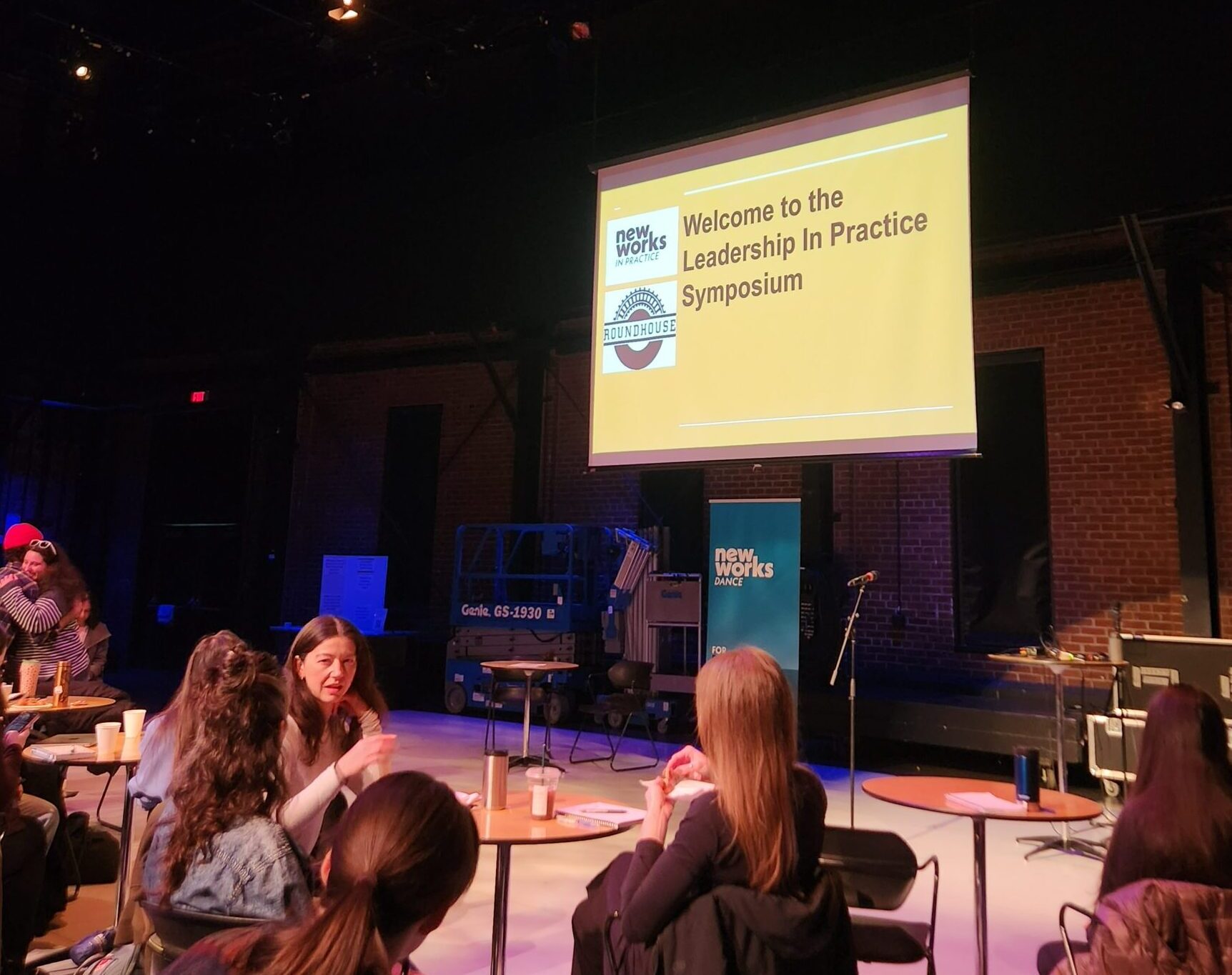
New Works – Leadership In-Practice Symposium March 22 2026
There was something in the room. The theatre was filled with friends, colleagues, artists, dancers, educators, facilitators, all kinds of people invested in dance; this kind of multiplicity can feel dense on its own as we meet and learn about one another. But there was also something that hung thick in the air. A certain density growing over the day; past experiences, present tensions, and future longings.
A haunting.
In the slow, weighted nods of the audience, it surfaced. Recognition, a shared “yes, that, too.” The speed of agreement felt in these nods gathered a “we.” And we formed around familiar refrains: imposter syndrome, the desire to do different from what came before, and the ongoing tender labour of reflection woven into creation.
Starr Muranko, opening the symposium with a land acknowledgement, offered that our work is “not to shy away from complicated relationships.” Here was the first collective recognition of the aspiration and unease both baked into the systems we move within.
This tension became – as I borrow from Naomi Brand – the day’s creative material. Such ripe pressure in the heaviness of knowing and the lightness of possibility. Dance, as each speaker made clear, is not a simple or linear practice. It is uncertain, layered, and often moves through unsustainable seasons of output. Yet, dance practice remains a site of beauty, affirmation, and experimentation.
To lead with dance, then, is to neither resolve this tension nor collapse the difference – we stay with it. Many things can be true at the same time.
Again and again, “authority” was absent from any definition and description of leadership. Rather “leadership” expanded to mean a relational, evolving practice, mindful of power, context, and aims. Marco Esccer reminded us that “today will not solve the problems of dance life – we are gathering perspectives and considering our impact.” What we do with dance takes time; it requires cultivation, attention, and a lot of not-knowing. Leadership, in this sense, is an ongoing attunement to context, people, and the moment as it unfolds.
All familiar improvisational tasks.
What emerged across the speakers was a set of orientations filled with propositions.
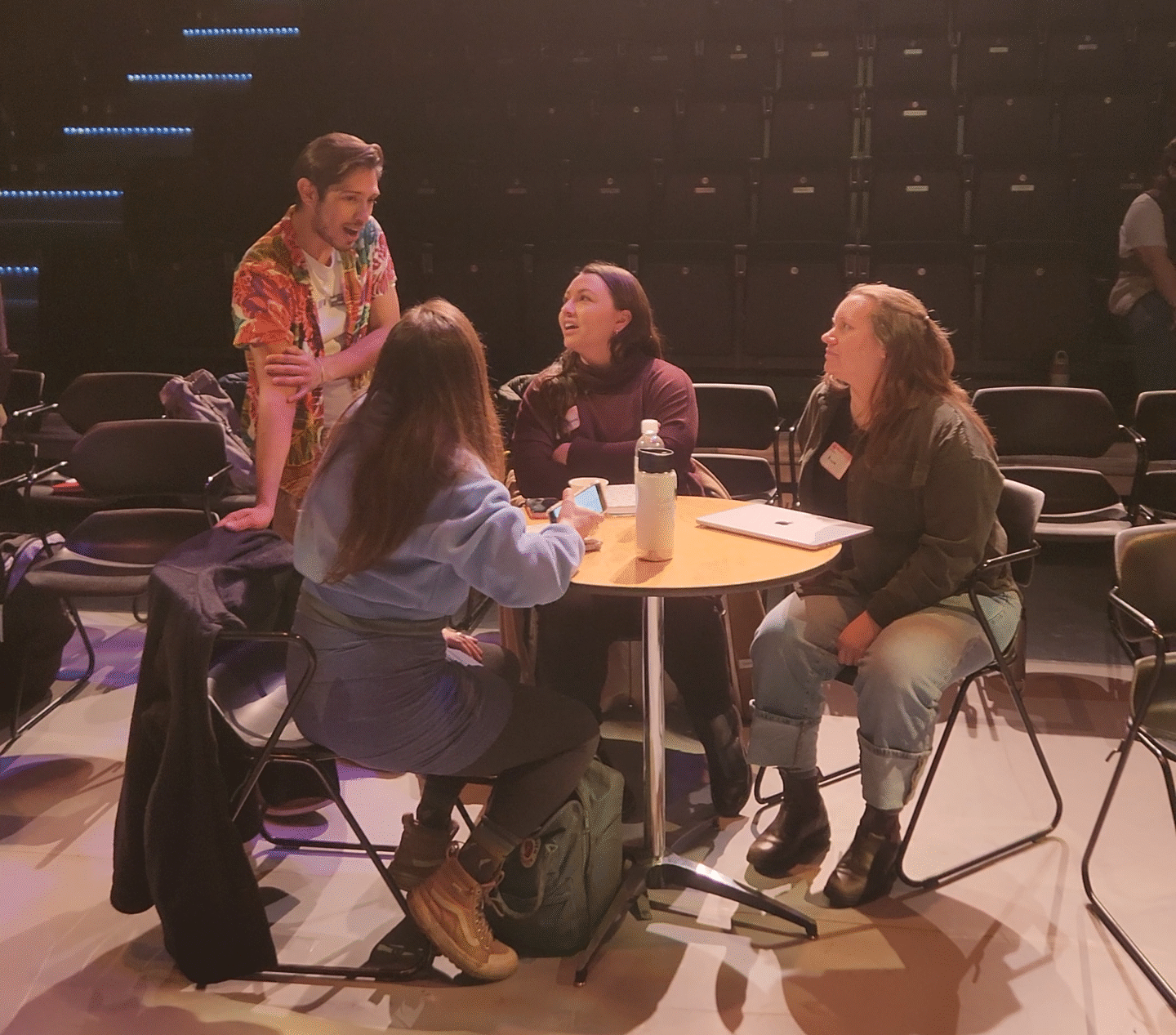
Vanessa Lalonde, leading from the front, emphasized leadership as an essential role for the flourishing of the art. Consistency, trust in one’s vision, and the importance of sustaining both oneself and the work. Leadership, for Vanessa, involves creating conditions where people can express themselves freely, even where there is disagreement. “Imposter syndrome is a good thing”, she noted, reframing doubt as a companion to growth.
Naomi Brand, leading from beside, showed a leadership that creates and holds containers – spaces where experiences can unfold responsively. “I don’t know what I’m doing,” she admitted, but she admitted this alongside the ways that not knowing is part of the puzzle for how meaning is made relationally, together, in the doing. Learning and leading, then, are never individual; they emerge between bodies and the cultivated containers of shared practice.
Kate Franklin, leading from the middle, blurred any distinction between the roles of leader and artist. To lead is to practice, fail, recalibrate, and dance; from the middle, things are sometimes less resolved and more lived through. Speaking from the experience of a burnout – here, many heads were nodding, understanding the cost of working in unsustainable systems and ambition – Kate described leadership as nimble and responsive to change. Joy, a primary motivator.
Each offering had me wondering and inspired.
A question lingered: where does leadership actually begin?
In practice.
Dance itself reveals this: making, training, and teaching are rarely discrete activities. For many of us, they happen all at once. And I think that leadership in dance operates similarly – it is not added on, it is not separate from, it is something always already embedded within the act of experimenting, relating, and paying attention.
But the haunting persists.
We remain tethered to inherited ideas of what “good” dance is, hitched to structures that shape what is valued and what is possible, beholden to metrics not of our making. We carry past disappointments, which Kate pointed to bluntly: “I felt let down by dance because I felt I sacrificed everything to it.” These histories are not easily shed, and evolving systems ask us to consolidate the chaotic emergent delight of doing into clear outcomes. Again, the nodding audience, the gestural recognition that these inheritances are not ours to hold alone. It informs how we lead, how we think about leadership, how we gather, and how we continue to imagine and practice otherwise.
The haunting is what makes transformation possible. Enabling constraints for improvisation.
If leadership in dance is anything, it’s this: a sensitivity to emergence. A commitment to the collective work of asking what we’re doing and how we might do it differently, together.
About Ileanna Sophia Cheladyn
Ileanna Sophia Cheladyn (Ily) is a dance artist and PhD candidate in sociocultural anthropology at UC Davis. She works slowly, sensitizing to the moments when theory and dancing kiss.
Why New Works Spotlights?
New Works delivers many unique programs, in many different ways, in support of many communities of artists. If you’ve ever asked a New Works staff member, “so, what does New Works do exactly?”, you’ve likely been met with a rambling run on sentence and a laundry list of exciting programs and projects that we have on the go. Up close it may look a little messy, but take a step back and you will see the container: all of our work exists in response to current gaps in the needs of the dance community. This looks like performance opportunities, partnership and collaboration, professional development, teaching engagements, mentorship, skills training, and many more. And we are just one small piece of this vitally diverse dance milieu.
We envision a healthy artist-centred arts ecosystem where connection, collaboration, and opportunity is celebrated beyond the container of our own organization. Through this ongoing blog series, we invite you to join us in witnessing artist experience through and beyond New Works programs, and in celebration of our living, breathing, shared communities.